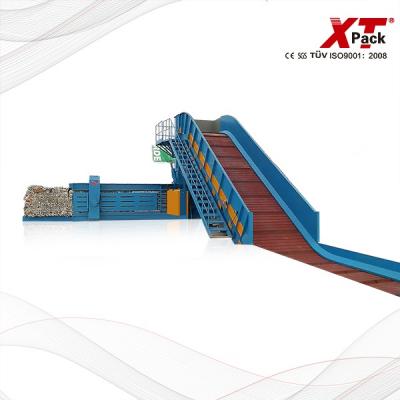
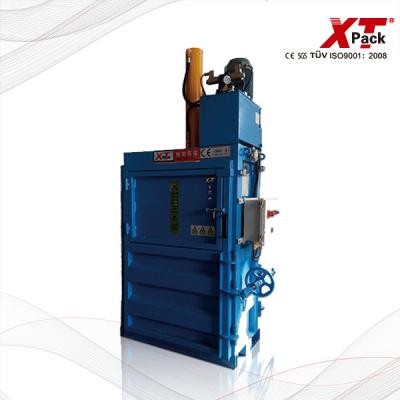
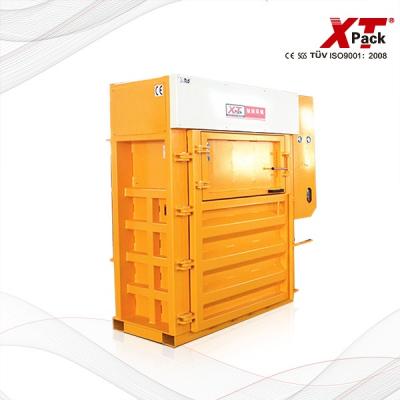
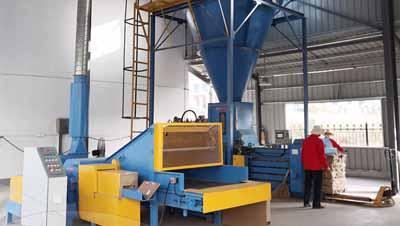
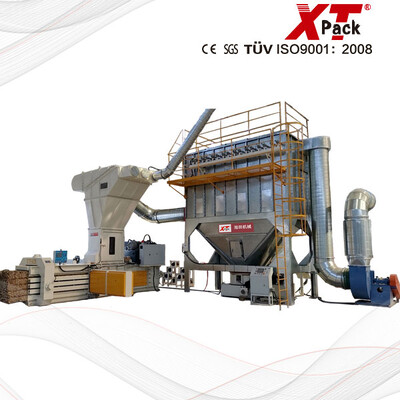
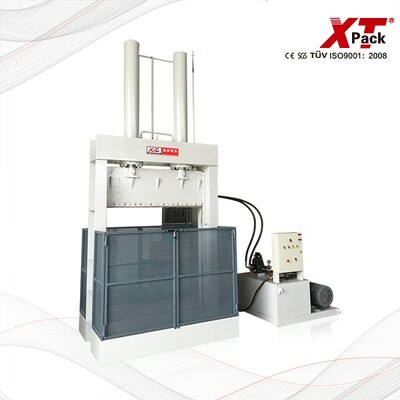
A textile baler is a mechanical device used for packaging and compressing textiles, widely used in the textile industry during production, storage, and transportation processes. This equipment utilizes compression and packaging technology to tightly wrap and secure textiles such as fabrics, yarns, and clothing. Based on its working principles and structural characteristics, textile balers can be classified into various types, such as hydraulic baling machines, pneumatic baling machines, and fully automatic baling machines.
Features of XTPACK Textile Baler
Hydraulic Lifting Door: Improves work efficiency and facilitates packaging and strapping.
Safety Mechanism: The press head stops moving downward when the feed door is open, ensuring operational safety.
Independent Emergency Stop Device: Enhances operational safety.
Special Press Head Guide Rail Design: Ensures the compression plate does not tilt during compression due to uneven feeding.
Japanese NOK Seals: Extends the lifespan of seals.
Japanese A.M.C. Hose Fittings: Ensures the machine is free from oil leakage issues.
Unique Motor and Pump Connection: Features a direct right-angle connection to ensure 100% concentricity, replacing the commonly used coupling connection, thereby extending the pump's service life.
Working Principle of the Textile Baling Machine
Feeding: The textiles to be baled are placed in the working area of the baling machine, typically via a conveyor belt or manual placement.
Compression: The baling machine compresses the textiles using an internal compression mechanism to reduce their volume, making them easier to store and transport.
Packaging: During or after compression, the baling machine wraps packaging materials (such as plastic film, cartons, etc.) around the textiles and seals and secures them.
Discharge: Once the baling process is complete, the machine ejects the baled textiles from the working area, ready for further storage or transportation.
Applications of XTPACK Textile Baler
The textile baler is widely used across various stages of the textile industry, including the storage of raw textile materials, production of textiles, and packaging and transportation of finished products. Additionally, it plays an important role in related industries such as clothing, home textiles, and footwear. XTPACK's textile balers are commonly used in second-hand clothing, wool, and cotton recycling plants for compressing second-hand clothes, quilts, shoes, wool, cotton, and more.