In many factories, warehouses, recycling centers, and packaging plants, waste handling is not the most visible part of daily operations. But it quietly affects labor efficiency, floor space, transportation cost, and even workplace safety.
Loose plastic film, cartons, packaging scraps, soft plastics, and mixed recyclable materials can quickly occupy valuable space if they are not compressed in time. Workers may spend extra time moving loose waste. Storage areas become crowded. Transport costs increase because trucks carry more air than material.
This is why choosing the right baler is not simply about buying a machine. It is about improving the way waste moves through the entire operation.
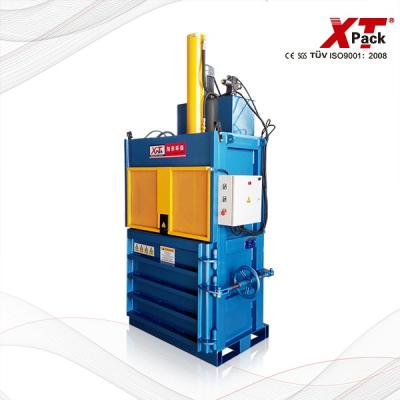
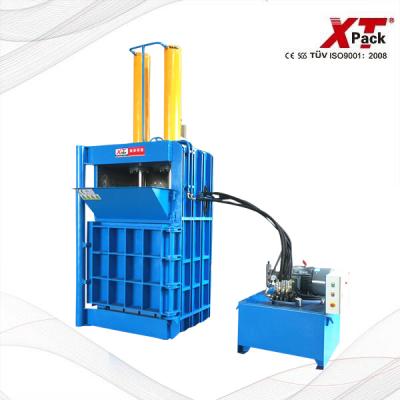
For businesses with different waste volumes and working environments, XTpack offers baling solutions from compact vertical balers to heavier-duty plastic recycling balers. Two representative models are the SX-200LA8060 small vertical baler and the XTY-500LE12080 soft plastic baler.
Why Waste Compaction Matters in Real Operations
In a real production environment, waste rarely appears in a perfectly organized way. A packaging line may generate cardboard scraps every hour. A plastic factory may produce film offcuts continuously. A warehouse may need to handle mixed packaging waste from inbound and outbound goods.
If these materials are left loose, three problems usually appear.
First, waste takes up too much space. Lightweight materials such as plastic film and cardboard have a large volume but low density. Without compression, they quickly fill bins, corners, and storage areas.
Second, manual handling becomes inefficient. Workers need to collect, move, and store loose materials repeatedly. This increases labor intensity and reduces productivity.
Third, logistics costs rise. Loose waste is difficult to stack, load, and transport efficiently. Compressed bales are easier to store, count, move, and ship.
A baler helps solve these problems by turning loose recyclable materials into compact, manageable bales.
Small Vertical Balers: A Practical Choice for Limited Space
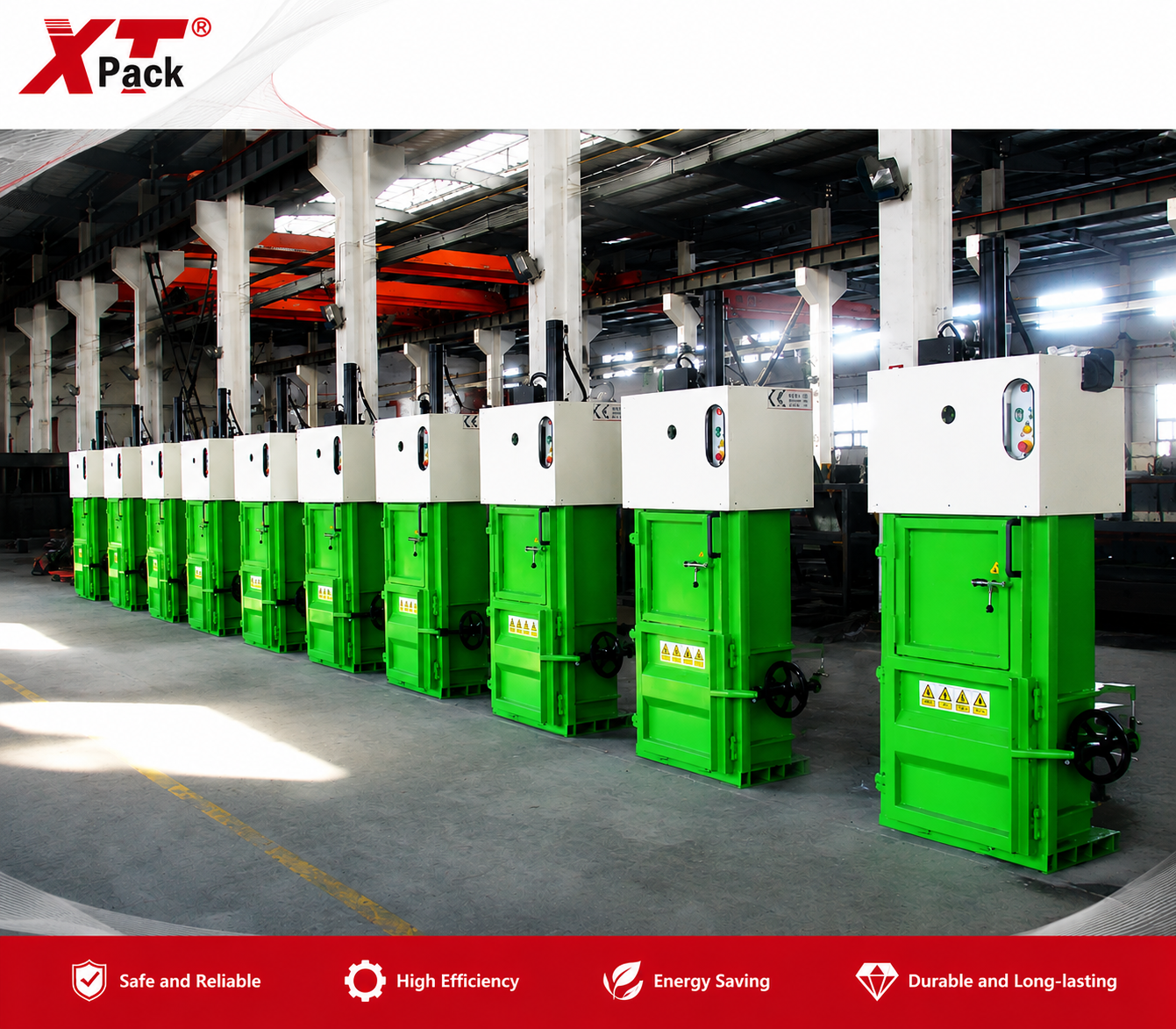
For companies that do not generate extremely large waste volumes, a compact vertical baler can be a practical and cost-effective solution.
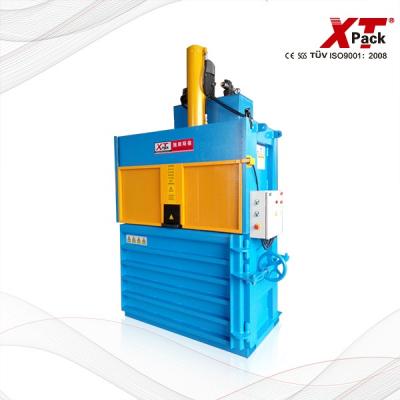
The SX-200LA8060 small vertical baler is designed for operations where floor space, power conditions, and daily waste volume need to be balanced. With 20 tons of pressure, a 700 × 400 mm feed opening, and an adjustable bale height, it is suitable for compressing materials into manageable bales for storage and recycling.
One important point is that this model can be configured with single-phase power, which is useful for facilities where industrial three-phase power is not always available. This makes it suitable for smaller warehouses, retail distribution sites, workshops, packaging rooms, and recycling collection points.
Another practical feature is the optional bottom liquid receiver. For materials that may contain residual liquid, this helps keep the working area cleaner and supports more organized waste handling.
The SX-200LA8060 is not only about compression force. Its value lies in helping smaller operations build a more disciplined waste management process without requiring a large machine footprint.
Soft Plastic Balers: Built for Higher-Volume Recycling Needs
Soft plastic waste is one of the more difficult materials to manage. It is light, flexible, bulky, and often difficult to stack. Plastic film, woven bags, packaging offcuts, and other soft plastic materials can quickly create a messy working environment if they are not compressed efficiently.
For higher-volume plastic recycling applications, a stronger baler is usually required.
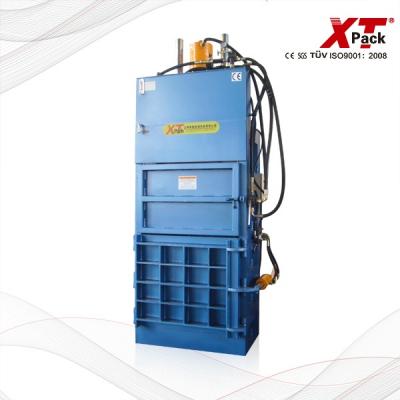
The XTY-500LE12080 soft plastic baler provides 50 tons of pressure and is designed for heavier-duty recycling operations. Its larger feed opening and larger bale size make it suitable for facilities that process higher volumes of plastic waste.
One of its key advantages is the automatic chain bale ejector. In daily operation, bale discharge can affect overall efficiency more than many buyers expect. If operators spend too much time removing finished bales manually, the machine may become a bottleneck. The automatic chain bale ejector helps finished bales exit more quickly and easily, reducing labor effort and improving workflow continuity.
For recycling plants, plastic product manufacturers, packaging factories, and logistics centers with larger waste volumes, this type of baler can support more efficient and consistent material handling.
Choosing Between a Small Vertical Baler and a Plastic Recycling Baler
The right baler depends on the material type, daily waste volume, available space, labor arrangement, and downstream recycling requirements.
A small vertical baler is usually better for companies that generate moderate volumes of waste and need a simple, compact solution. It is easier to place in limited spaces and can support daily waste compaction without overcomplicating operations.
A soft plastic baler is more suitable when the waste stream is mainly plastic film, soft plastic packaging, or other bulky recyclable materials. If the operation requires heavier bale weights, higher compression force, and faster bale discharge, a larger plastic recycling baler will be more appropriate.
In other words, the question should not only be “Which baler is cheaper?” The better question is:
Which machine matches the actual waste flow of the site?
If the machine is too small, operators may need to run it too frequently. If the machine is too large, the investment and space requirements may not match the real workload. A good baler selection should balance efficiency, cost, space, and long-term use.
What Professional Buyers Should Evaluate Before Purchasing
For B2B buyers, especially factory managers, recycling companies, packaging plants, and procurement teams, selecting a baler requires more than checking pressure and price.
The first factor is material behavior. Cardboard, soft plastic, PET bottles, textiles, and mixed packaging waste compress differently. Soft plastic may rebound after compression, so bale density and tying method matter.
The second factor is operating frequency. A machine used once or twice a day has very different requirements from a machine running continuously in a recycling facility.
The third factor is labor efficiency. Features such as automatic bale ejection, suitable feed opening size, and convenient operation can directly affect daily productivity.
The fourth factor is available space and power supply. Some sites need compact machines, while others can install larger vertical or horizontal systems.
The fifth factor is after-sales support. A baler is a working machine, not a one-time consumable product. Spare parts, maintenance guidance, installation support, and technical communication all affect long-term reliability.
Why Customization Matters
No two waste handling sites are exactly the same.
One factory may need to compress soft plastic film from production lines. Another may handle packaging waste from warehouse operations. A recycling center may process mixed materials from different suppliers every day.
This is why customization is important. Machine configuration, feed opening size, bale size, ejection method, and auxiliary equipment can all influence how well the baler fits the actual operation.
For buyers, customization does not always mean making the machine complicated. It means making the machine practical.
A well-matched baler should reduce unnecessary handling steps, improve bale consistency, and fit naturally into the existing workflow.
From Waste Handling to Operational Efficiency
A baler may look like a simple machine, but its impact can be seen across the entire operation.
It helps reduce storage pressure.
It makes recyclable materials easier to move.
It improves workplace organization.
It supports better loading and transportation efficiency.
It helps companies build a more professional recycling process.
For small and medium-sized operations, the SX-200LA8060 small vertical baler offers a compact and practical way to manage daily recyclable waste.
For higher-volume soft plastic recycling, the XTY-500LE12080 provides stronger compression, larger bale capacity, and automatic bale ejection to support more efficient processing.
The right baler does not just compress waste. It helps turn a messy, space-consuming problem into a controlled and manageable workflow.
For companies looking to improve waste handling, reduce labor pressure, and make recycling operations more efficient, choosing the right baling solution is an investment in long-term operational stability.