The price gap between a semi-automatic and fully automatic baler can be significant. For a recycling business processing several tons of material every day, however, the cheaper machine does not always produce the lower operating cost.
The difference usually comes down to what happens around the baler. How is material fed? Who ties the bales? How often does an operator need to stop another task? And what happens when incoming waste starts arriving faster than the baler can process it?
These questions are more useful than simply deciding that “automatic is better.”
Start With the Labor Around Your Baler
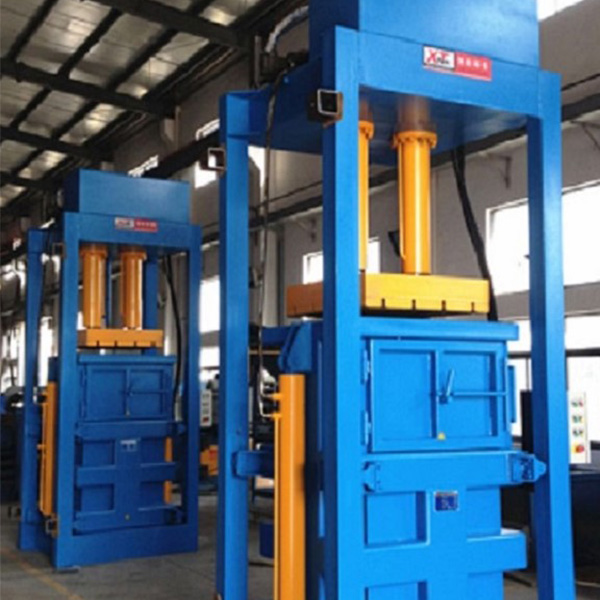
A semi-automatic baler can be a practical choice when material volumes are moderate and operators are already available for feeding and tying. The initial investment is lower, the operating process is straightforward, and many recycling operations simply do not need a fully automated line.
The economics change when material is generated continuously. If workers repeatedly move loose cardboard or plastic to the baler, wait for compression and manually complete the tying process, labor becomes part of the cost of every bale produced.
At that point, the question is no longer how much more an automatic baler costs. It is how much repetitive handling it can remove.
Continuous Material Flow Changes the Calculation
High-volume corrugated plants, printing facilities and recycling centers often need the baler to work as part of a production flow rather than as a standalone machine.
A belt conveyor can continuously feed material into a fully automatic baler, while automatic tying reduces the need to stop the process for every finished bale. This becomes particularly valuable when waste generation follows production throughout the shift.
For facilities sitting between these two situations, XTPACK also offers medium-sized full automatic balers, allowing automation to be matched to actual throughput rather than automatically moving to the largest equipment available.
Compare Cost Per Bale, Not Only Purchase Price
Suppose two machines can both handle the required material. The semi-automatic option costs less upfront, but requires more operator time. The automatic system costs more but produces more bales with less manual intervention.
This is where procurement teams should look beyond the quotation.
Estimate how many hours the baler will operate each year, how much labor is involved in feeding and tying, expected output during peak periods, and whether delays at the baler affect upstream production. Energy consumption, tying material and maintenance should also be included.
The result is a much more useful comparison: cost per ton or cost per bale over several years, rather than purchase price alone.
Choose Automation Where It Removes a Real Bottleneck
There is little value in paying for a large automatic system if the facility generates only a small amount of material each day. Equally, saving on the initial purchase makes little sense if a semi-automatic machine becomes the bottleneck six months after production increases.
XTPACK supplies both horizontal balers and semi-automatic configurations for different processing volumes. If you are comparing the two, send us your material type, daily volume, working hours and current feeding method.
We can help you calculate which level of automation fits the operation before you invest in capacity you may not need—or discover later that you bought too little.
Discuss your baling requirements with XTPACK →