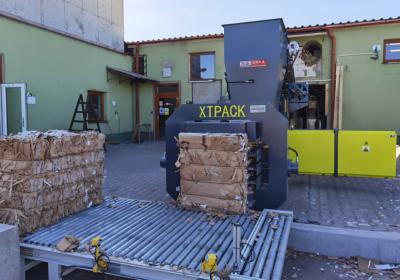
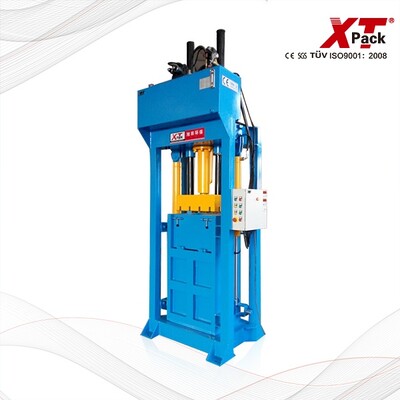
In many warehouses, logistics centers, and recycling facilities, waste handling is not just a housekeeping issue—it directly affects efficiency, space utilization, and operating costs. Materials such as plastic pallets, packaging films, and corrugated cardboard accumulate quickly and are difficult to manage in loose form.
From a product perspective, the challenge is not how to compress waste, but how to make it fit into daily operations without disrupting workflow. This is where a well-matched plastic baler machine becomes valuable. By turning loose materials into consistent, manageable units, businesses can bring structure to an otherwise reactive process.
Start with the Material, Not the Machine
One common mistake in equipment selection is starting with machine specifications instead of waste characteristics. In practice, material type should always come first.
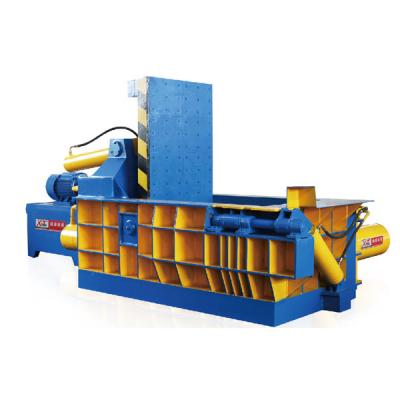
Soft plastics such as films and packaging bags behave very differently from rigid materials like pallets. For example, lightweight materials require controlled compression to maintain bale stability, while rigid plastics demand higher force and stronger structural design.
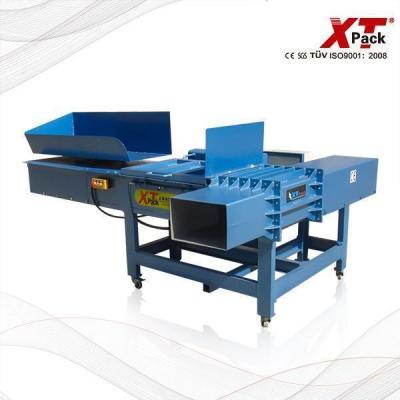
In operations where both plastic and cardboard are present, using a dedicated system for each—such as combining a plastic baler with a corrugated baler—often leads to better consistency and less re-handling.
From experience, separating materials early is one of the simplest ways to improve efficiency without increasing complexity.
When a Small Vertical Baler Makes Sense
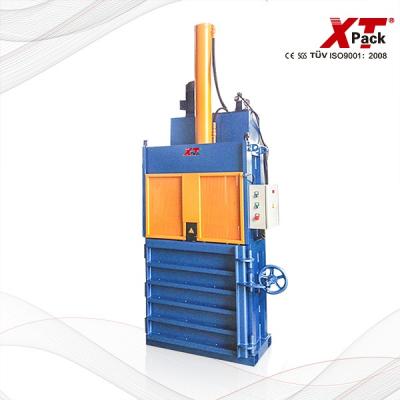
A small vertical baler is often the right starting point for facilities with moderate waste output and limited space. It is commonly used in backroom operations where simplicity and footprint matter more than speed.
Many buyers begin by reviewing vertical balers for sale, mainly because of lower upfront investment and ease of installation. This is a reasonable approach, but it works best when waste generation is stable and not continuous.
The limitation becomes visible when the machine is required to operate beyond its intended cycle. At that point, the issue is no longer performance—it becomes workflow interruption.
Throughput Is the Real Decision Factor
In most projects, the real turning point is not the type of machine selected, but the level of throughput required by the operation. When waste generation is low and irregular, manual handling or compact systems can often meet the need without adding unnecessary complexity. However, once waste is produced continuously, the approach needs to change. At that stage, the system should be integrated into the production flow so that materials are processed as they are generated, rather than accumulating and requiring separate handling.
In environments where multiple material types are involved, relying on a single solution can create inefficiencies. Dedicated systems for different materials often provide better stability and reduce the need for re-handling. From a product planning perspective, the objective is not simply to compress waste, but to remove it as a disruption to the workflow. A machine that demands constant operator attention may solve the issue of volume reduction, but it can introduce new inefficiencies by increasing labor dependency and interrupting daily operations.
Looking at Plastic Baler Cost in Context
The plastic baler cost is usually the first concern during procurement, but focusing only on price often leads to short-term decisions.
A lower-cost system may seem attractive initially, but if it increases labor input or slows down operations, the total cost over time can be higher. On the other hand, a properly sized solution can reduce handling steps, improve consistency, and lower transport frequency.
This is why comparing equipment based on price alone rarely leads to the right decision. What matters more is how the system performs under real operating conditions.
What Happens When the System Doesn’t Match the Operation?

How Commercial Balers Can Benefit Your Warehouse
In real operations, the impact of selecting the wrong system often becomes apparent very quickly. In one case, a packaging facility chose a compact unit to minimize initial investment, even though it was handling continuous plastic and cardboard waste throughout the day. Within a short period, operators were required to pause frequently to load materials, and compression cycles became a bottleneck rather than a solution. Waste began to accumulate around the machine, affecting both efficiency and workspace organization. While the equipment itself was functioning as intended, it was not suited to the actual throughput requirements. The issue was not technical capability, but a mismatch between system capacity and operational demand.
In contrast, another warehouse took the opposite approach by investing in a large-capacity system in anticipation of future growth. However, daily waste output remained relatively low and irregular. As a result, the machine was underutilized, valuable floor space was occupied unnecessarily, and maintenance costs increased without delivering meaningful operational benefits. In this case, excess capacity did not translate into improved efficiency. Instead, it introduced additional complexity without solving a real problem.
These situations highlight a common pattern: system performance is closely tied to how well it matches real operating conditions. When the equipment is aligned with the workflow, the difference becomes immediately noticeable. For example, a mid-sized logistics warehouse handling packaging waste was experiencing cluttered storage areas and inefficient manual handling. After implementing an XTpack compact solution, the facility was able to significantly reduce waste volume, organize storage more effectively, and shorten handling time. Transport cycles were also reduced due to improved compaction. The overall workflow became more predictable without increasing labor requirements.
A similar improvement was observed in a recycling facility processing mixed plastic materials. The operation initially faced inconsistent bale quality and frequent re-handling due to unstable compression. After upgrading to an XTpack system configured for different material types, compression stability improved and bale consistency increased. This reduced the need for manual reprocessing and allowed throughput to stabilize. In this case, aligning the system with material characteristics and workflow requirements resulted in both higher efficiency and better output quality.
From a product perspective, these examples reinforce a simple principle: the effectiveness of a baler system depends less on its specifications and more on how well it fits the way the operation actually runs.
What a Well-Matched Setup Looks Like
In practice, well-performing baling systems tend to share a few consistent characteristics. Waste is processed as it is generated, rather than being allowed to accumulate. Operator involvement is reduced to a minimum, which helps maintain efficiency and consistency. Storage areas remain organized, and the output—especially bale density and shape—stays stable across different batches. When these conditions are in place, the equipment no longer feels like an added task, but becomes a seamless part of the overall workflow.
When it comes to evaluating a baling machine for sale, focusing only on technical specifications often leads to incomplete decisions. A more practical approach is to look at how the machine will perform under real operating conditions. Questions such as how much waste is generated daily, whether the output is continuous or batch-based, what types of materials are involved, and how much manual handling is acceptable tend to provide clearer direction. In most cases, these operational factors are more useful than comparing models on paper, as they directly reflect how the system will function in day-to-day use.
Conclusion
A plastic baler machine is not just a tool for compressing materials—it is a way to improve how waste is managed within an operation. The right system reduces friction, improves consistency, and supports long-term efficiency.
From a product perspective, the best choice is not the most advanced or the most affordable option, but the one that fits the way the facility actually operates.
Frequently Asked Questions (FAQ)
What is a plastic pallet baler used for?
It is designed to compress rigid plastic materials such as pallets into compact, manageable units.
What is the difference between plastic and cardboard baling?
Plastic materials often require more controlled compression, while cardboard is easier to compact and typically handled separately.
Is a small vertical baler suitable for all operations?
It works well for moderate volumes, but may not be suitable for continuous or high-output environments.
How should I evaluate plastic baler cost?
Consider not only the initial price, but also labor savings, efficiency, and long-term operational impact.